
What to wear under leggings: the no-VPL guide that actually works
Leggings reveal everything. Every seam, every waistband ridge, every bunched piece of fabric. They're the most unforgiving thing in your wardrobe and the most worn — which is why "what underwear works under leggings" is one of the most-Googled underwear questions of all time.

Most of the answers online are bad. "Wear seamless." "Go commando." "Try a G-string." All technically possible but none of them actually solve the problem, because the problem isn't underwear style — it's underwear construction. Here's the actual fix.
Why leggings show every line
Leggings are made of fabric that conforms tightly to the body. Anything between you and the leggings prints through to the outer surface — that's just how compression fabrics work. The thinner the leggings, the more it shows.
"Compression" leggings (the activewear ones, often 75% nylon / 25% spandex) are slightly more forgiving than fashion leggings (which are often thinner). But neither is forgiving enough for stitched seams or thick elastic waistbands. The base layer needs to be smooth at every contact point with the leggings.
The four contact points that show
Map your underwear. There are four places where it touches your body and creates a visible line under leggings:
- The waistband (top edge). If your leggings sit at your natural waist or above, the underwear waistband sits right under or against the leggings waistband. Visible ridge.
- The leg openings (bottom edges). The most-shown line. Goes around your hip and thigh, exactly where the legging fabric is most stretched.
- The back centre seam. Vertical line down the middle of your bum. Most visible when sitting or doing anything hip-flexing (squats, Pilates, bending).
- The gusset edges. Where the front and back panels join through the crotch. Less visible but can show in front under thinner fabric.
"Seamless" underwear addresses #1 and #4 reasonably well but typically leaves #2 and #3 untouched. That's why most "seamless" underwear still shows a leg-opening line under leggings.
What actually solves it
1. Bonded edges (kills the leg-opening line)
Bonded edges replace stitching with heat-laminated edges. No thread, no needle holes, no raised seam. The underwear ends in a soft, tapered hem that doesn't print. This is the single biggest factor in invisibility under leggings.
Test by feel: run your finger across the leg opening of any pair of underwear. If you feel a defined ridge or stitched hem, it'll show under leggings. If it feels like a smooth taper into nothing, it won't.
2. A flat, soft waistband (kills the top-edge line)
Real no-show waistbands are a continuous band of soft fabric, not a strip of elastic stitched onto the body. They sit flush against the skin instead of standing up off it.
If your leggings hit at the natural waist, you want the underwear waistband below or right at the legging waistband — preferably below, so the soft underwear band is invisible under the legging band.
3. A one-piece back panel (kills the centre seam)
Most underwear has a vertical seam down the back. Even with bonded leg edges, this seam will show through compression leggings — especially when you bend or sit. Look for underwear with a one-piece back: a single panel of fabric shaped to wrap the back without joining anywhere visible.
4. Performance fabric instead of cotton
Cotton has a visible weave that prints through pale leggings (heather grey is the worst offender). Cotton also gets damp during a workout and stays damp, which compresses the fabric and amplifies any line.
Recycled nylon with a cotton gusset has no visible weave and wicks moisture. Even under the thinnest leggings, you won't see fabric texture.
Style: G-string, brief, or boyshort?
Each works under leggings if the construction is right (the four points above). Style matters less than people think.
- G-string: Solves the leg-opening problem entirely (no leg openings on the bottom half). Best for most leggings situations. Some women find them less comfortable for long workouts; others find them more.
- High-cut brief: Modern cut, sits at the hip not the waist, leg openings are higher than traditional briefs. With bonded edges, almost as invisible as a G-string.
- Boyshort: Trickiest under leggings because the leg openings sit lower on the thigh, exactly where leggings are tightest. Even with bonded edges, the line can show if leggings are thin enough.
Our recommendation: G-string (with bonded edges, soft waistband, performance fabric, cotton gusset). If you're skeptical of G-strings, get one and try it under your worst-offender leggings. The ones you have right now that show every line. You'll be surprised.
The colour question
Under most leggings, colour matters less than you'd think. Black leggings hide everything. Dark navy leggings hide most things. The risky territory is pale leggings — heather grey, light blue, white, beige.
For pale leggings:
- Match-skin-tone underwear is conventional advice but it's wrong about half the time. The variable that matters more is fabric weave (cotton shows weave, nylon doesn't).
- Pastel pink and powder blue both disappear under most pale leggings — they read as "skin tone neutral" without trying to match exactly.
- Black under pale leggings is fine if the leggings are thick enough. Hold them up to a window: if you can see your hand through them, go with a closer-to-skin colour. If not, black works.
The Pilates problem
Pilates leggings are typically thinner than gym leggings, and the movements (single-leg bridges, side splits, reformer work) put your underwear in unforgiving angles. If you're going to test underwear, test it in a Pilates class.
Camel toe is usually underwear bunching at the front. A front panel that sits flat through the centre pulls less than a narrow band. Cuts vary between brands, so check before you buy.
What we make, in case you're wondering
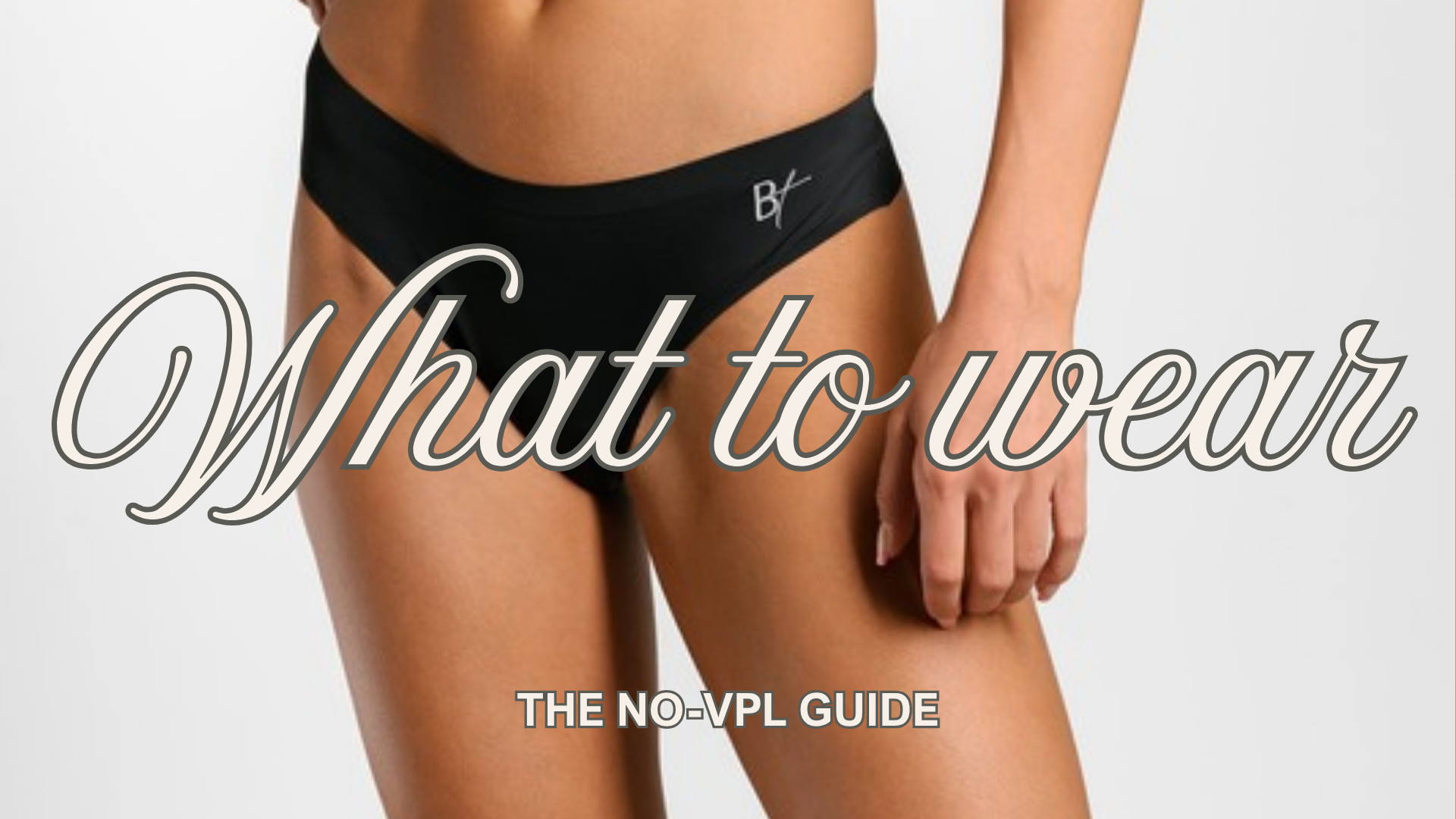
The Gym G has all four design points covered: flat soft waistband, bonded leg edges, one-piece back panel, recycled-nylon-and-spandex body with a cotton gusset. Designed to be invisible under everything — leggings included. Available in Classic Black, Midnight Blue, Pastel Pink, and Powder Blue.
If you've been on the lookout for underwear that works under leggings without compromise, we'd genuinely like you to try it. We sell singles ($32), but most women come back for a multipack — the maths gets a lot nicer.
Further reading
- The complete guide to underwear that disappears under everything — our pillar guide
- What to wear under white jeans (and never see a line) — same problem, different fabric
Questions? Email hello@barethrills.com — we read every message.