
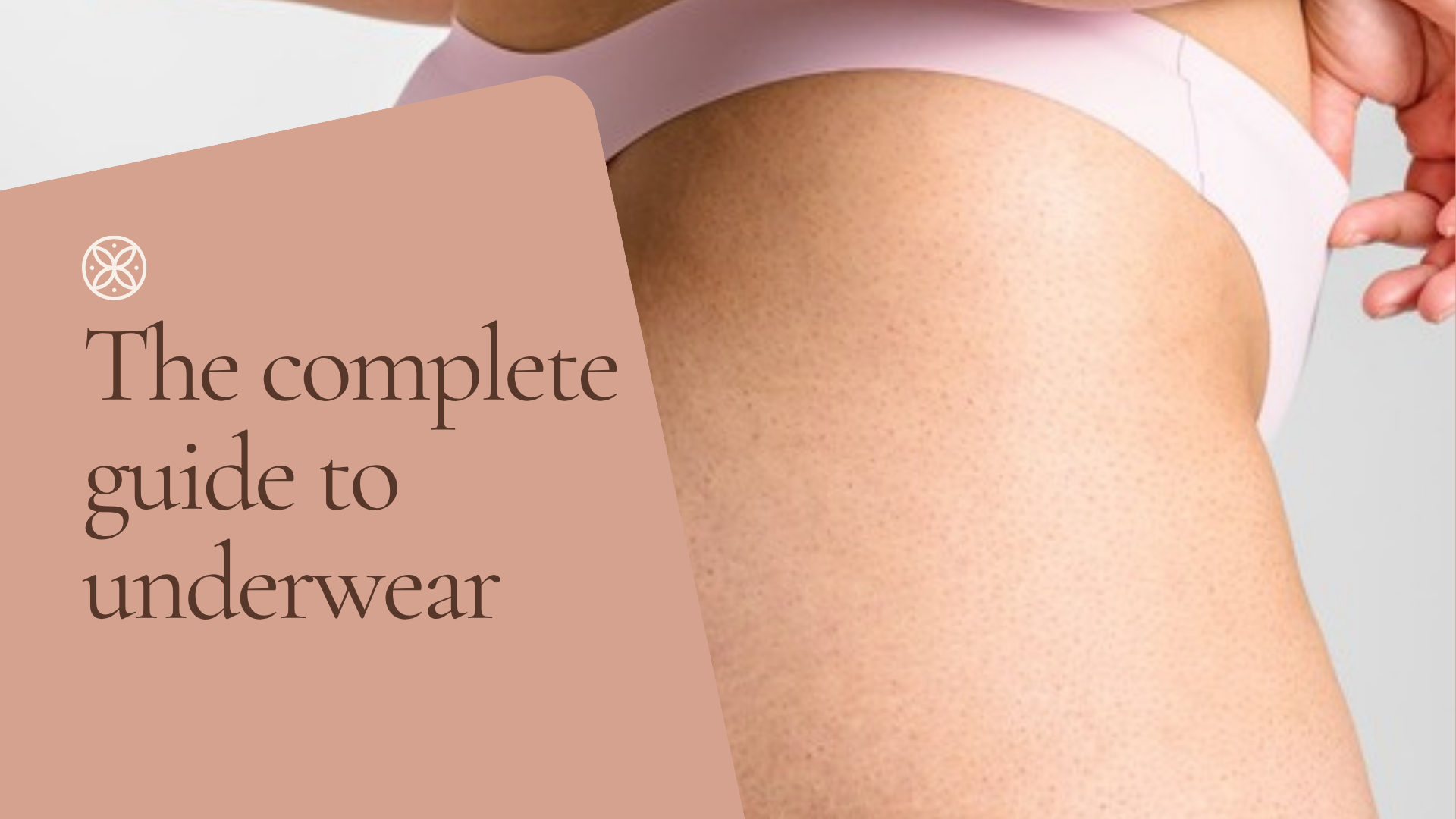
The complete guide to underwear that actually disappears under everything
This is a long one — about a 12-minute read. It's also the only underwear guide we'd put our name to. Bookmark it, send it to a friend who's still in cotton briefs from 2019, or just scroll to whichever section is your current frustration.

Most women don't think about underwear until it ruins an outfit. The waistband prints through your white pants. The leg openings show in your slip dress. The fabric gets damp by 11am and stays damp for the rest of the day. By 3pm you're in the bathroom adjusting something that shouldn't need adjusting. By dinner you're wishing you'd worn anything else.
The thing is — underwear that doesn't do any of this exists. It's just not what most brands sell. So this is the long-form guide to what actually makes underwear disappear under everything: what the four design decisions are that 99% of brands skip, why fabric matters more than colour, why "size up for comfort" is the worst advice you'll get, and how to assemble a drawer that you stop noticing entirely.
Why most underwear shows under everything
Walk into any department store underwear section and pick up ten random pairs. At least eight of them will fail at least one of these four basic tests:
- The waistband is a thick band of elastic stitched to the fabric, creating a visible ridge across your hip the moment you put pants on.
- The leg openings are stitched, with a hem that prints through anything tight (leggings, white jeans, a slip dress).
- The back has a centre seam — a vertical line down the middle that shows under any close-fitting fabric, especially when you sit down.
- The fabric is woven cotton, which absorbs moisture, holds it all day, and prints its weave through pale fabrics.
Each of these is solvable. None of them is technically difficult. But solving all four costs more than most brands are willing to spend, so they pick one or two and call it "no-show." It usually isn't.
The four things that make underwear genuinely disappear
1. A flat, soft waistband (no elastic ridge)
Real "no-show" waistbands aren't elastic at all in the conventional sense. They're a continuous band of soft fabric — usually a recycled-nylon-spandex blend — that sits flat against the skin instead of standing up off it. The trick is that the band itself is part of the underwear, not an extra piece sewn on top.
The test: pinch the top edge of the waistband between your thumb and forefinger. If it's a separate strip of elastic that stands up off the fabric, you'll see it through anything thin. If it's a soft, continuous band that sits flush, you won't.
2. Bonded edges (no leg-opening stitch)
Bonded edges replace stitching with a heat-sealed, glued-down hem. The fabric is laminated to itself with no thread, no needle holes, no raised line. The edge ends in a soft taper rather than a sharp seam.
It's not a new technology — bonded edges have been used in performance swimwear for years. But for everyday underwear, they're rare because they cost more to produce. The end result is a leg opening you genuinely can't see through anything.
3. A seamless back (no centre seam)
The back of most underwear is two pieces of fabric stitched together down the middle. That seam runs vertically through the most-visible part of the garment when you wear pants or a dress. Even when the rest of the underwear is bonded, the seam will print through.
The fix is a one-piece back panel — a single piece of fabric cut and shaped to wrap the back without any vertical join. More expensive to manufacture, fully invisible under everything else.
4. Performance fabric instead of cotton
Cotton has one job: absorb. It does that beautifully, which is why we like it for towels and t-shirts. But underwear is the worst possible application: cotton soaks up sweat, holds it close to skin, takes hours to dry, and prints its woven texture through anything pale or thin.
The replacement isn't synthetic in the bad sense — it's recycled nylon (often sourced from old fishing nets and pre-consumer waste) blended with a small percentage of spandex for stretch. That fabric wicks moisture away from the skin, dries fast, and is smooth enough that it has no visible weave.
The underside — the gusset — should still be cotton, because skin is still happier next to cotton over the long term. The body of the underwear is performance fabric. The gusset is cotton. Best of both.

Fabric science: cotton vs recycled nylon vs bamboo vs other "natural" alternatives
If you've ever bought underwear marketed as "bamboo," "modal," "Tencel," or "merino," you've encountered the second-tier fabric story. They're not better than cotton for underwear; they're cotton's siblings — slightly softer, slightly more breathable, but with the same fundamental absorbency problem. They get damp and stay damp.
Here's what each does and how they compare for everyday wear:
- Cotton: Soft, comfortable, absorbent, prints its weave through pale fabrics. Holds moisture for hours. Most cotton underwear is woven, which means visible texture.
- Bamboo viscose: Marketed as eco-friendly. Slightly softer than cotton. Same absorbency problem. Often blended with synthetic fibres for stretch — at which point it's essentially a cotton-spandex hybrid with bamboo fibres.
- Modal / Tencel: Cellulosic fibres derived from wood. Softer than cotton, drape like silk. Still absorbent. Better for nightwear than active wear.
- Merino wool: Naturally moisture-wicking and antibacterial. Excellent for active wear. Expensive and can pill. Some women find wool against skin uncomfortable.
- Recycled nylon (PRUECO® and similar): Wicks moisture, dries fast, no visible weave, durable, GRS-certified when sourced from recycled inputs. The closest thing to "invisible under everything." Slightly more expensive than cotton.
- Spandex / elastane: Not a primary fabric, but a 5-30% blend with anything else for stretch and rebound. Without it, fabrics don't return to shape after wear.
For everyday underwear specifically — meaning underwear you wear from morning to night, sometimes through a workout, sometimes through a long flight, sometimes through a 12-hour shift — recycled nylon with a cotton gusset wins. It's the only blend that solves the moisture problem AND the visibility problem without compromising on softness or durability.
The damp problem nobody talks about
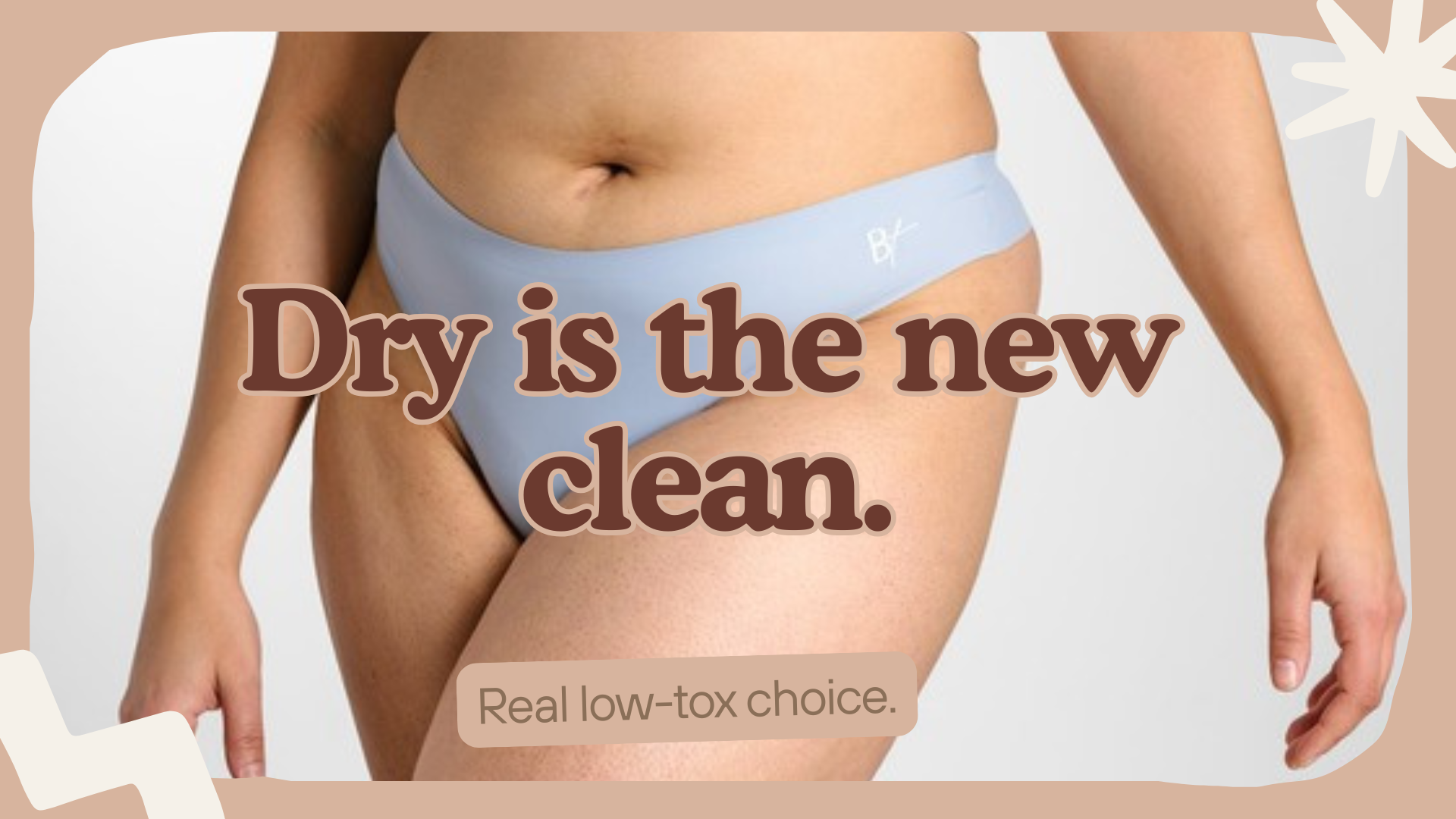
Visible Panty Line is the underwear problem we all talk about. Dampness is the one we don't.
Here's what happens with cotton or bamboo underwear on a normal day: by 11am, after a coffee and a brisk walk, the fabric is faintly damp. By lunchtime, after sitting in a warm office, it's properly damp. By mid-afternoon it's dried out a bit but the cycle repeats with the next walk. By the time you get home, you've spent eight hours with damp fabric next to the most temperature-sensitive parts of your body.
This causes three things you've probably blamed on something else:
- Recurrent UTIs and yeast infections. Damp, warm fabric is a perfect bacterial environment. The first thing most gynaecologists ask about recurrent issues is underwear material.
- Skin irritation and chafing. Damp fabric has higher friction than dry fabric. Combined with movement, it abrades skin in soft places.
- The "wet feeling" you can't quite shake. You're not imagining it. Your underwear is damp. Even if you don't consciously notice, your body does.
Performance fabric solves this not by being magical but by physics: it wicks moisture away from skin to the outer surface where air can dry it. By the time you'd be damp in cotton, the moisture has moved off your skin and is evaporating from the outer fabric. You stay dry, the underwear dries out faster, and the cycle doesn't compound through the day.
Sizing: how to actually pick the right size
The single worst piece of underwear advice on the internet is "size up for comfort." Looser underwear isn't more comfortable — it's underwear that shifts during the day, rolls down at the waist, and creates ridges where it bunches.
The right rule: if you're between sizes, size down. Performance fabric stretches and softens with wear. A pair that feels "firm" on day one will feel perfect by day three. A pair that feels "comfortable" on day one will feel loose by week two.
Concrete sizing guide for The Gym G (similar logic applies to most performance underwear):
- XS: AU dress 6-8, hip 85-90 cm
- S: AU dress 10, hip 90-95 cm
- M: AU dress 12, hip 95-100 cm
- L: AU dress 14, hip 100-106 cm
- XL: AU dress 16+, hip 106-112 cm
If you're at the bottom of a range, size down. If you're at the top, size up. If you're squarely in the middle and want to be safe, take both — most brands sell multipacks for less than two singles, and you can keep the size that fits.
The everyday rotation: how many pairs you actually need
Here's the maths nobody tells you. The average woman owns somewhere between 12 and 20 pairs of underwear. Of those, she actually rotates through about 5. The other 7-15 are bad pairs she keeps meaning to throw out.
The rotation that actually works:
- 4-7 pairs of your absolute favourite underwear, all the same brand and cut. Wear these on rotation. They're your default.
- 2-3 backups for laundry days or travel — slightly less perfect but still acceptable.
- That's it. No "ones for working out and ones for everyday." No "sexy ones for special occasions." Modern performance underwear handles every context.
Total: 6-10 pairs. The rest of what's currently in your drawer is, statistically, faded, stretched-out, or wrong-cut for what you actually wear. You'll feel weirdly liberated when you bin them.
The replacement happens once. You buy 7-10 good pairs in a single go (a multipack does this best — see below for the maths) and you don't think about underwear again for a year.
Sustainability and longevity: how long should underwear last?
If you're treating it well — cold wash, air dry, no fabric softener, no tumble dryer — properly-made performance underwear lasts 12 to 18 months of daily wear before the elastic memory starts to soften noticeably. Cotton underwear tends to go out of shape sooner at the same wear rate.
Two reasons this matters:
- The cost-per-wear maths. A $32 pair worn 200 times costs 16 cents per wear. A $15 pair from a fast-fashion brand worn 50 times costs 30 cents per wear. The cheap pair is more than 1.5× more expensive in real terms — and that's before you factor in how many pairs you replace because they go to landfill.
- The environmental maths. Most cheap underwear is virgin polyester or non-recycled cotton, both of which carry significant water and carbon costs. Recycled nylon (GRS-certified) made from old fishing nets and pre-consumer textile waste is the only widely-available underwear material with a real, traceable circularity story.
The "buy less, buy better" principle works particularly well for underwear. Eight excellent pairs you wear on rotation for a year-plus beats thirty cheap pairs cycled through and replaced. Less landfill, lower cost-per-wear, less drawer clutter, more comfortable life.
What we make, in case you're wondering
Bare Thrills is the brand making the kind of underwear this article describes. The Gym G is built with all four of the design decisions above — a flat soft waistband, bonded leg edges, a one-piece seamless back, recycled performance fabric with a cotton gusset. GRS-certified, sourced from old fishing nets and pre-consumer waste, made for women who want to forget they're wearing underwear.
Sold in singles ($32) or in packs:
- The 4-Pack — $119 — half a week's rotation, $29.75 a pair, save $29.
- The 7-Pack — $179 — a full week, $25.57 a pair, save $80. Most popular.
- The 10-Pack — $219 — drawer reset, $21.90 a pair, save $101 (32% off).
Each pair sized and coloured separately. Free shipping on every multipack. Ships globally via Australia Post.
Further reading
- What to wear under white jeans (and never see a line) — the practical no-VPL guide
- The 3 signs your underwear drawer needs a refresh — when to actually replace what you have
Questions? Email hello@barethrills.com — we read every message.