
Dry Is the New Clean: Why Staying Dry Is the Real Low-Tox Choice for Women
For years, “low-tox living” has been associated with avoiding anything synthetic. Many women were told that natural fabrics - especially cotton - were the only safe, clean, and healthy choice for underwear.
But here’s the part almost nobody is talking about: Low-tox isn’t defined by the fabric label. It’s defined by what actually supports your body’s health.
And sometimes, the healthier choice is the one that keeps you dry, not the one that absorbs and holds moisture.
Let’s unpack why.
The Low-Tox Myth: Natural Fabrics Are Automatically Healthier
Cotton has a great reputation. It’s soft, breathable, and familiar - which is why many people assume it must be the healthiest choice for underwear.
But breathability doesn’t equal performance.
And “natural” doesn’t always equal “better”.
Cotton absorbs sweat… and then keeps it there. That means hours of dampness trapped against delicate skin - which creates the perfect environment for irritation, imbalance, and discomfort.

The Truth: Moisture + Skin = Problems
Here’s what most “low-tox” conversations leave out:
Sitting in moisture all day is one of the fastest ways to disrupt your body’s natural balance.
Prolonged dampness can
- Upset your pH
- Irritate delicate skin
- Encourage bacterial overgrowth
- Increase the chance of infections
- Cause chafing
- Trap heat and sweat against your skin
Your body relies on sweat evaporating to cool you down and regulate itself. When moisture is trapped by absorbent fabric, your skin simply can’t do its job.
That’s not low-tox - that’s a problem.
Real Low-Tox Living Means Staying Dry
If “low-tox” is about supporting your body, then the solution isn’t avoiding technology — it’s choosing technology that keeps you dry, balanced, and comfortable.
That’s where our Prueco® recycled performance fabric comes in.
Why Prueco® Performs Better:
- Moisture-wicking: pulls sweat away from your skin (instead of holding it)
- Fast drying: so you’re not sitting in damp underwear for hours
- Lightweight & breathable: keeps you cool during movement
- Shape-retaining: no sagging, stretching, or bagginess
- Reduced irritation: less moisture = fewer issues
And because airflow matters, we combine our performance fabric with a cotton gusset - giving you both moisture control and breathability where it matters most.
In short
Dry where you need it. Natural where it counts. Healthier all round.
Low-Tox for You - and Kinder on the Planet
Our Prueco® fabric is also recycled, reducing waste and giving new life to existing materials. So not only is it better for your skin - it’s a more environmentally responsible option too.
Low-tox for your body. Low-impact for the planet.
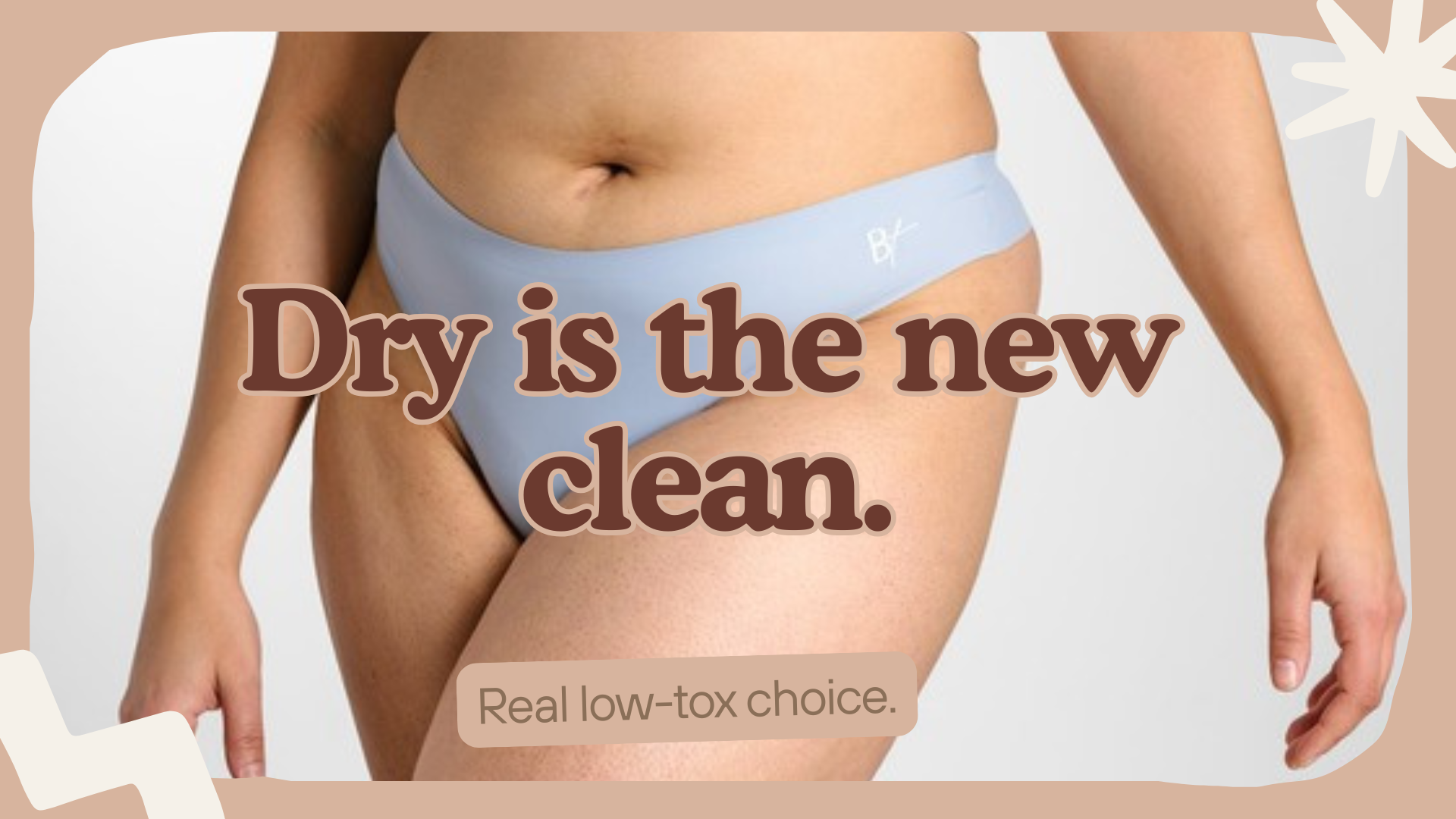
Dry Is the New Clean
The idea that “synthetic = bad” and “cotton = clean” is outdated. Your body thrives when it’s dry, balanced, and supported — and the right fabric technology helps make that possible.
Low-tox living isn’t defined by avoiding modern fabrics. It’s defined by choosing what actually keeps you healthy.
And dryness is one of the most important parts of that equation.
Let’s Open the Conversation
Have you avoided performance fabrics because they didn’t seem “low-tox”? Would you rethink things if staying dry was actually the healthier choice?
👇 Share your thoughts in the comments — we’d love to hear from you.
If this resonates, the underwear might too.
Underwear you forget you're wearing — try a multipack at up to 32% off, free shipping on every pack.
See the bundles →